Start Trading Now
Sign up for ZitaPlus, where knowledge and personalized support come together for your success.
Open Real Account Open Demo Account
Every forex trade begins with a simple decision that gets overlooked. Which currency pair to trade. Before indicators are added, before strategies are tested, before risk is calculated, the pair itself already sets the tone for everything that follows.
Some pairs move smoothly. Others feel jumpy. Some are cheap to trade. Others quietly eat into profits through spreads and execution issues. These differences are not random. They exist because currency pairs are not all built the same way.
To make sense of this, the forex market groups currency pairs into three broad categories: major, minor, and exotic pairs. These labels are not there for theory or textbooks. They describe how the market actually behaves.
A trader who understands these categories avoids many early mistakes. A strategy that feels broken on one pair may work just fine on another. Volatility that feels exciting on paper may turn stressful in live conditions. Pair selection is not a detail. It is a foundation.
Before comparing majors, minors, and exotics, it helps to step back and look at how currency pairs are built and what their prices actually mean in practice.
Every currency pair consists of two parts. The first currency is called the base currency. The second is the quote currency.
The exchange rate tells you how much of the quote currency is needed to buy one unit of the base currency. If EUR/USD is trading at 1.10, one euro costs 1.10 US dollars. That relationship never changes.
This fixed structure is important. It keeps the market standardized and avoids confusion. EUR/USD is always quoted the same way, no matter the platform or broker.
A common misunderstanding is thinking that a rising currency pair means the first currency is strong in isolation. In reality, it only tells you that one currency is gaining relative to the other.
If EUR/USD rises, it could be because the euro is strengthening, the dollar is weakening, or both. Forex prices always reflect comparison. There is no absolute strength here, only relative movement.
This is why traders say currencies trade in pairs for a reason. You are never just trading one economy. You are trading two at the same time.
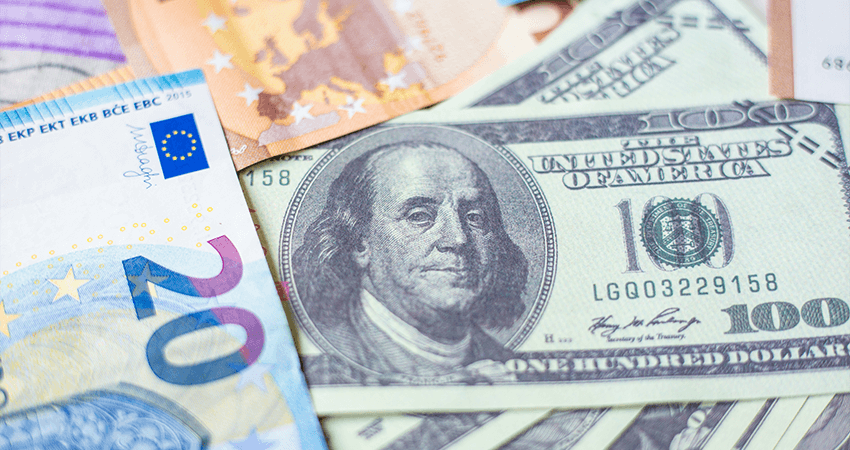
Major currency pairs form the backbone of the forex market. They attract the most attention, the most capital, and the highest trading volume.
A major currency pair always includes the US dollar. This is not a coincidence. The dollar remains the world’s primary reserve currency and the most widely used settlement currency in global finance due to the Bretton Woods Agreement.
Energy, commodities, debt, and trade contracts are still heavily priced in dollars. This creates constant demand and supply, which translates into deep liquidity.
Major pairs usually share a few defining traits:
These features make majors the most accessible part of the forex market.
The most widely traded major pairs include:
These pairs are supported by almost every broker and traded heavily by institutions.
Major pairs tend to move in a more orderly way. Because liquidity is deep, large orders can enter and exit the market without causing sudden spikes.
They react strongly to scheduled economic events such as inflation releases, employment data, and central bank decisions. Because many traders are watching the same events, price reactions can be sharp, but they usually make sense in hindsight.
Another advantage is cost. Spreads on major pairs are typically the lowest available. For traders who trade frequently, this difference adds up over time.
Major pairs are suitable for:
This does not mean majors are easy. Competition is high, and reactions can be fast. But the trading environment is generally fair and predictable.

Minor currency pairs, also known as crosses, remove the US dollar from the equation and focus on the relationship between two other currencies.
A minor pair includes two major currencies but excludes the dollar. Examples include EUR/GBP or GBP/JPY.
Even though the dollar is not part of the pair, it still influences pricing indirectly through broader market flows. However, the direct focus is on how two economies compare to each other.
Some frequently traded minor pairs include:
These pairs are popular among traders looking for more specific exposure.
Liquidity in minor pairs is lower than in majors, but still sufficient for active trading. Spreads are wider than majors, though usually manageable.
What makes minors interesting is their sensitivity to regional factors. For example, EUR/GBP reflects differences between European Central Bank and Bank of England policy expectations rather than global risk sentiment.
Volatility in minor pairs can increase quickly during overlapping trading sessions, especially when both regions release data on the same day.
Many traders turn to minor pairs to express a clearer view.
Instead of trading EUR/USD and dealing with constant US data influence, a trader may choose EUR/GBP to focus specifically on Europe versus the UK. This can reduce noise, but it requires a solid understanding of both economies involved.
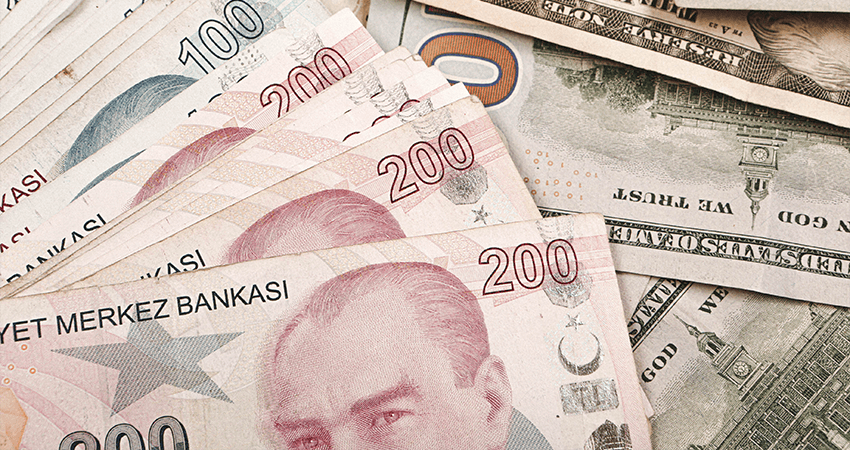
Exotic currency pairs sit at the outer edge of the forex market. They behave very differently from majors and minors and demand extra caution.
An exotic pair combines a major currency with a currency from an emerging or developing economy.
Liquidity is thinner, spreads are wider, and trading conditions can change quickly.
Some common exotic pairs include:
These pairs are heavily influenced by local economic and political developments.
Exotic currencies can rely on foreign capital inflows. When global investors feel confident, money flows in. When sentiment turns, it leaves fast.
Thin liquidity means even moderate orders can push prices sharply. Political statements, central bank actions, or capital controls can cause sudden and aggressive moves.
Spreads can widen without warning, especially during volatile periods or outside local trading hours.
Exotic pairs are generally better suited for:
They are rarely ideal for beginners or short term trading.
Seeing these categories side by side makes the differences clearer.
Liquidity affects how smoothly trades are executed. Higher liquidity usually means tighter spreads and less slippage.
| Pair Type | Liquidity | Typical Spread | Execution Quality |
| Major | Very High | Low | Excellent |
| Minor | Medium | Medium | Good |
| Exotic | Low | High | Variable |
Majors usually move in a steady and structured way. Minors can be more reactive to regional news. Exotics may remain quiet for long periods, then move sharply with little warning.
Volatility creates opportunity, but it also increases risk. The two always come together.
There is no universal best pair. The right choice depends on the trader.
Beginners may benefit from starting with major pairs. Costs are lower, behavior is more consistent, and mistakes are less punishing.
Intermediate traders may explore minor pairs to express more focused views. Advanced traders may include exotics, but usually with smaller position sizes.
Different strategies naturally align with different pair types.
A good strategy can fail simply because it is applied to the wrong type of pair.
Risk does not scale evenly across currency pairs. There are several things to check before trading; two of the most important being position sizing and political risk.
A standard lot on an exotic pair carries far more risk than the same size on a major. Higher volatility and wider spreads mean exposure grows quickly.
Many traders reduce position size significantly when trading minor or exotic pairs.
Major pairs mostly react to scheduled economic data. Exotic pairs are more sensitive to political developments, policy decisions, and unexpected announcements.
This unpredictability makes disciplined risk limits essential.
Several myths persist in forex trading.
One is the idea that exotic pairs are better because they move more. Movement without liquidity can lead to poor execution.
Another is that major pairs are too slow. In reality, consistent movement with low costs can be more profitable over time.
Finally, not all pairs react the same way to news. Context matters more than headlines.
A few practical habits help traders manage different pairs more effectively.
Depth usually beats variety in the long run.
Major, minor, and exotic currency pairs each play a role in the forex market. None is inherently superior. What matters is alignment.
Majors offer stability and efficiency. Minors provide targeted exposure. Exotics offer opportunity, but demand respect.
Can the same strategy work equally well on major, minor, and exotic pairs?
In most cases, no. Strategies are sensitive to spread size, liquidity, and volatility. A setup that performs well on a major pair may struggle on an exotic pair simply because execution costs and price behavior are very different.
Why do some traders avoid exotic pairs even though they move more?
Because movement alone is not enough. Exotic pairs usually come with wide spreads, sudden price jumps, and limited liquidity. These factors can turn a good idea into a losing trade, especially for short-term strategies.
Are minor currency pairs less influenced by US economic data?
They are usually less sensitive, but not completely immune. US data still affects global risk sentiment, which can spill over. However, minor pairs tend to react more strongly to regional developments between the two currencies involved.
Is it a good idea to trade many different currency pairs at the same time?
For most traders, focusing on a small group of pairs works better. Trading too many pairs can lead to overlapping risk, confusion, and weaker decision making, especially when correlations are ignored.
How long should a trader stick with one currency pair before switching?
There is no fixed rule, but consistency helps. Spending time with one or two pairs allows traders to understand their rhythm, typical reactions, and behavior during different market conditions.
Would like to learn how to look financial markets from a different angle? Then keep reading and invest yourself with ZitaPlus.