Start Trading Now
Sign up for ZitaPlus, where knowledge and personalized support come together for your success.
Open Real Account Open Demo Account
Inflation in the United States is no longer the screaming headline it used to be, but it is still the quiet force behind a lot of price action. You can see it in rates markets first, then in the dollar, and finally in risk assets like equities and commodities.
On paper, the US looks like it is in a “normal-ish” inflation zone again. In practice, the story is messier. Some prices are behaving, others are not. Politics is part of the equation now. And for the dollar, what matters is not only where inflation is today, but where markets think it will be in six months.
That is why inflation still matters in 2026. Not only because of CPI releases, but because inflation is the input that shapes the Fed, and the Fed shapes the world’s most important currency.
Before getting into causes and policy plans, it helps to anchor the conversation in the latest data. The most recent US CPI release shows inflation is steady, but not fully “finished.”
In December 2025, the Consumer Price Index (CPI-U) rose 0.3% month over month on a seasonally adjusted basis. Over the last 12 months, CPI rose 2.7%.
Core CPI, which strips out food and energy, rose 2.6% year over year.
Within that same report:
So, headline inflation is not extreme. But it is also not “done.” The mix still matters.
One reason inflation still feels real to households is that some essential categories are still running hotter than the headline number suggests. One recent breakdown pointed out that electricity was up 6.7% and piped gas up 10.8% (based on the December CPI data).
Those are the kinds of costs people notice. They also matter politically, which becomes important when we talk about the Trump administration’s messaging around “lowering costs.”
| Measure (latest) | What it says | Why markets care |
|---|---|---|
| CPI YoY (Dec 2025) | 2.7% | Sets the baseline inflation narrative |
| Core CPI YoY (Dec 2025) | 2.6% | “Sticky” inflation signal for the Fed |
| CPI MoM SA (Dec 2025) | +0.3% | Short-term momentum and surprises |
| Energy YoY | +2.3% | Can re-ignite inflation quickly |
| Food YoY | +3.1% | Consumer sentiment and politics |
People sometimes talk about inflation as if it is a single thing. It is not. Inflation is a pile of overlapping stories that change depending on the time period.
To keep it realistic, it helps to frame US inflation as three big phases.
This is the part everyone remembers. Pandemic-era disruptions caused shortages, shipping chaos, and price spikes. Goods inflation surged, then slowly cooled as supply chains normalized. That part did fade.
But that did not mean inflation disappeared. It just changed shape.
Once goods inflation cooled, services inflation stayed stubborn. A strong labor market, rising wages, and steady consumption kept services prices firm longer than many expected.
This is also where the Fed’s role becomes central. Strong demand is great for growth, but if demand stays too firm, inflation cools more slowly, and rate cuts get pushed out.
This is the part traders are increasingly focused on now.
Inflation in 2026 is not only about economics. It is also about policy choices that can push prices up or down, even if growth is stable.
A few of the biggest policy-linked inflation channels markets are watching:
Tariffs matter because research keeps showing they do not magically “get paid by foreigners.” A Kiel Institute study cited widely in the financial press found that US importers and consumers bore about 96% of tariff costs.
That does not automatically mean “tariffs equal inflation explosion,” but it does mean the inflation risk is real when tariff talk heats up.
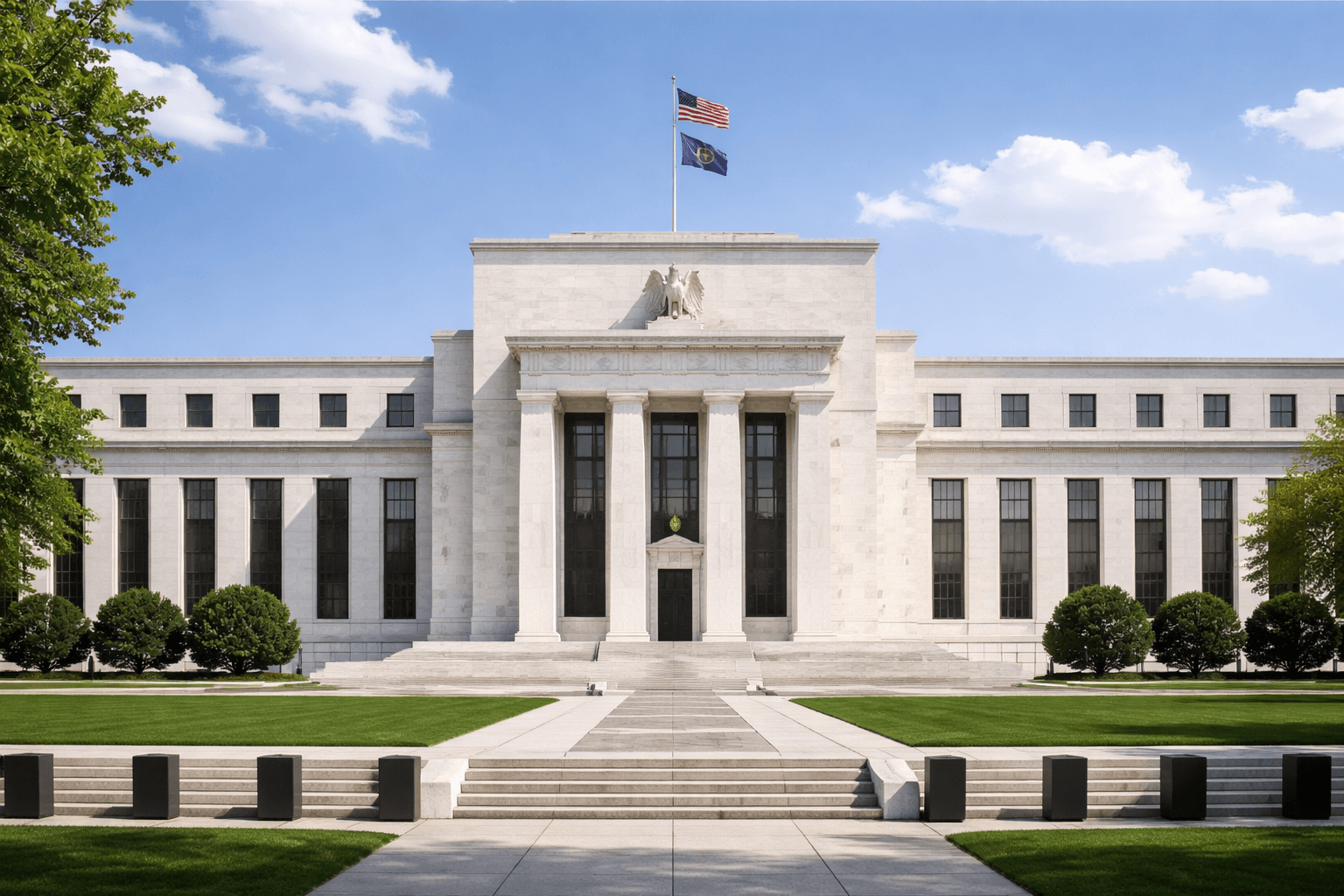
Inflation does not move the dollar directly. The Fed’s reaction function does. Let’s take a look at how the Fed takes a role in this new situation with Jerome Powell.
The Fed’s job is to keep inflation under control and the labor market healthy. In reality, that means managing expectations, not only rates.
That is why Powell’s press conferences still move markets. Even when rates do not change, the wording can shift the path.
Many mainstream expectations going into late January 2026 are for the Fed to hold steady. Commentary across major outlets has framed the base case as no immediate move this week, with easing seen later, depending on labor and inflation trends.
Several sources also refer to the current fed funds target range as 3.5% to 3.75% (set after a December move).
There is also a leadership clock running.
Powell’s term as Fed Chair ends in May 2026, while his term as a Fed governor runs longer (into 2028).
Markets care about this because leadership uncertainty can leak into inflation expectations. If traders think the Fed could become more politically pressured, they may demand a higher risk premium in rates, and that can spill into the dollar.
A lot of USD pricing boils down to real yields.
Here is the simplified idea:
Real yield ≈ Nominal yield − Expected inflation
Expected inflation is not the same as CPI. It is what markets think inflation will average over the horizon that matters for bonds.
When real yields rise, the dollar gets support because global capital seeks yield. When real yields fall, the dollar can soften, and gold benefits.
This is not a rule, but it is a strong tendency.

Political messaging differs from what actually moves inflation. Still, the market cares about what policy direction looks like, and the Trump administration has been framing cost reduction as a key theme.
If you strip it down, there are a few broad tools that can influence inflation:
Reducing energy costs is politically powerful because it is visible. It also feeds into broader production costs.
Some coverage has focused on administration moves and arguments around tackling rising US electricity bills, highlighting how utility inflation can sit above headline CPI.
Whether policy can quickly push those prices down is another question. But markets do react to the direction of energy policy.
Shelter inflation is slow and annoying. It lags everything. Trump has promised aggressive housing reforms, according to coverage about potential steps like declaring a housing emergency and pushing structural changes.
Even if housing reforms are real, the inflation impact is usually delayed. But if markets believe housing costs might cool, that can influence rate expectations earlier than the data shows.
The administration also frames deregulation as a growth and cost tool. Brookings has been tracking regulatory changes and deregulatory efforts in the second Trump administration.
Deregulation can reduce costs in some sectors, but it can also raise uncertainty. Markets will price both the upside and the risk.
Tariffs are where inflation risk gets tricky. Politically, tariffs are presented as leverage. Economically, they can act like a consumption tax, especially if domestic buyers absorb most of the cost. The Kiel research mentioned above is one of the clearest recent reminders that tariffs usually land at home.
This matters because if fresh tariff threats expand in 2026, markets may start pricing higher input costs, especially for goods and industrial supply chains.
So the “strong USD” goal can clash with tariff-driven inflation. Sometimes tariffs strengthen the dollar short term through risk-off flows, but they can also lift inflation and keep rates higher. That combination is not always comfortable for growth or equities.
This is where we connect the dots. Inflation is not just a cost-of-living issue. It is a pricing engine for almost everything.
A hotter CPI print can:
A cooler print does the opposite, though the market reaction depends on growth fears. Sometimes “cool inflation” is bullish, sometimes it is scary.
Stocks usually like falling inflation if growth stays okay. But if inflation falls because demand is collapsing, equities can struggle.
This is why the same CPI number can produce different equity reactions depending on the macro mood.
Gold is not simply an “inflation hedge.” In practice, gold reacts more to:
That is why gold can rally even when inflation is moderating, if real yields fall or political uncertainty rises.

At first glance, Japan’s yen intervention chatter seems like a separate story.
In reality, USD/JPY is a global macro pressure point. It feeds into risk appetite, rate volatility, and even how people think about currency policy credibility.
Markets have been on alert as the yen approached levels where intervention risk rises. Recent reporting said Japan’s currency diplomat Atsushi Mimura noted Japan is in close coordination with the US on Forex, while officials reiterated readiness to respond to excessive volatility.
Another key detail: reporting also said the New York Fed conducted dollar/yen “rate checks,” which traders may interpret as a possible precursor to coordinated action.
And this matters historically because the last US-Japan coordinated intervention was in 2011.
Here’s the chain that traders actually care about:
It is not a clean line, but it is real.
There is also the political layer. Reuters reported comments from former finance minister Yoshihiko Noda suggesting intervention has a limited effect unless it has international backing, and that Japan should focus on fiscal discipline and BOJ independence.
When markets start talking about independence, you are no longer in pure FX land. You are in credibility land. And credibility is where inflation expectations live.
If you are following USD inflation and the dollar in 2026, you do not need a hundred indicators. You need a short checklist.
Markets tend to rotate between a few broad narratives. Here are the most realistic ones traders keep modeling:
Inflation drifts lower, growth stays okay, and the Fed stays patient. The USD holds up because real yields stay respectable.
Inflation refuses to fall cleanly, especially in services and essentials. Rate cuts get delayed. The USD stays supported, but risk assets get choppier.
Energy or trade policy pushes prices higher again. Inflation expectations rise. Volatility rises. The market stops debating cuts and starts debating whether policy is too loose.
Japan intervenes, or at least signals a credible path to it. USD/JPY volatility spills into broader markets, and risk sentiment shifts quickly.
US inflation in 2026 is not a crisis headline, but it is still the heartbeat behind rates and FX pricing.
The key point is simple: the USD does not move because inflation exists. It moves because inflation shapes the Fed, and the Fed shapes real yields, and real yields pull capital.
Politics matters more than usual this year. Trade policy matters. Leadership timelines matter. And global FX tension, especially in USD/JPY, keeps feeding back into the larger macro picture.
If US inflation is near 2.7%, why does it still matter so much for markets?
Because markets trade the direction, not the snapshot. A stable inflation rate that risks re-accelerating can be more problematic than a higher rate that is clearly falling. Inflation also shapes rate expectations, which directly affect the dollar, bonds, and global capital flows.
Can political decisions really influence inflation as much as economic factors?
Yes, especially through energy, housing, and trade policy. Tariffs, regulations, and fiscal choices can all change costs and demand. Markets may react even before policies are implemented if the probability of inflationary outcomes rises.
Why does the dollar sometimes strengthen even when inflation is uncomfortable?
Because higher inflation can keep interest rates elevated. If US real yields remain attractive compared to other regions, capital can still flow into the dollar despite inflation concerns, particularly during periods of global uncertainty.
How important is Fed leadership uncertainty for inflation expectations?
Very important. Inflation expectations are anchored by trust in the central bank. When leadership transitions approach or political pressure narratives grow, markets may demand a higher risk premium, which affects yields, the dollar, and inflation-linked assets.
Why does USD/JPY intervention matter for US inflation at all?
USD/JPY is a global financial conditions barometer. Large moves can affect risk appetite, capital flows, and bond markets. These channels feed back into demand conditions, which influence how persistent inflation may be in the US.
Would like to learn how to look financial markets from a different angle? Then keep reading and invest yourself with ZitaPlus.