Start Trading Now
Sign up for ZitaPlus, where knowledge and personalized support come together for your success.
Open Real Account Open Demo Account
For a long time, markets considered disagreements as something temporary. The system had always found its way despite the contradictions. Leaders would eventually find a common path. That assumption worked for decades, especially in the post-Cold War era where institutions carried most of the weight.
As we move deeper into 2026, that comfort is fading.
Tensions between the United States and Europe are no longer happening quietly in a diplomatic manner. They are happening in public, through social media posts, tariff announcements, and sharp language at global summits. And for the first time in a while, markets are reacting not just to the economic implications, but to the political direction behind them.
This is not a single disagreement. It is a collection of pressures coming together at the same time. Trade policy is colliding with security policy. Energy strategy is being pulled into diplomatic leverage. Even alliance credibility, something markets once took for granted, is now being questioned openly.
Investors are trying to adjust. Currency moves are no longer clean reactions to data. Equity performance is split by region and sector. Gold and silver are behaving less like inflation hedges and more like insurance against political unpredictability.
The key issue is not whether tensions will rise or fall in the coming weeks. The real question is whether the structure that kept these relationships stable is still intact.
At first glance, the situation looks like a familiar trade conflict. Yet, trade pressure now meets national security. The announced tariffs and retaliations being discussed are a sign of something new. Negotiations are hinted at. On the surface, it resembles past disputes.
The difference lies in the reasoning behind the moves.
In previous trade disputes, tariffs were usually framed as tools to rebalance trade flows or protect domestic industries. The underlying message was that once adjustments were made, the tariffs could be rolled back. In early 2026, the framing has shifted.
Tariffs are now being described as strategic instruments. They are not just about economics. They are about leverage. When the US announced new tariffs on multiple European countries and tied them directly to the Greenland issue, markets took notice for a simple reason. The objective was not economic correction. It was political compliance.
That distinction matters. Tariffs used as leverage tend to stay longer. They are harder to negotiate away because removing them looks like backing down, not compromising.
From a market perspective, this introduces duration risk. Investors are no longer asking whether tariffs will happen. They are asking how long they might last.
Greenland is not new to geopolitical discussions, but the way it is being framed now is different.
The US administration has placed Greenland inside a national security narrative. The proposed “Golden Dome” missile defense system is described as essential protection against Russia and China. In that context, Greenland becomes less a territory and more a strategic asset.
Once an issue is framed as national security, economic logic can take a back seat. Markets understand this instinctively. Security priorities tend to override cost-benefit analysis, especially in election cycles or periods of global tension.
This is why investors reacted strongly. The Greenland issue stopped being about trade, diplomacy, or even alliances. It became part of a larger story about how power is being exercised.
As soon as security language entered the discussion, the conflict expanded beyond trade.
European leaders responded not by negotiating tariffs but by discussing sovereignty, autonomy, and legal defense mechanisms. That response itself signals a shift. When both sides stop talking about economics and start talking about power, resolution usually slows down.
Markets price this as structural uncertainty. It may not be chaos, but the issues may take longer than usual to solve this time.
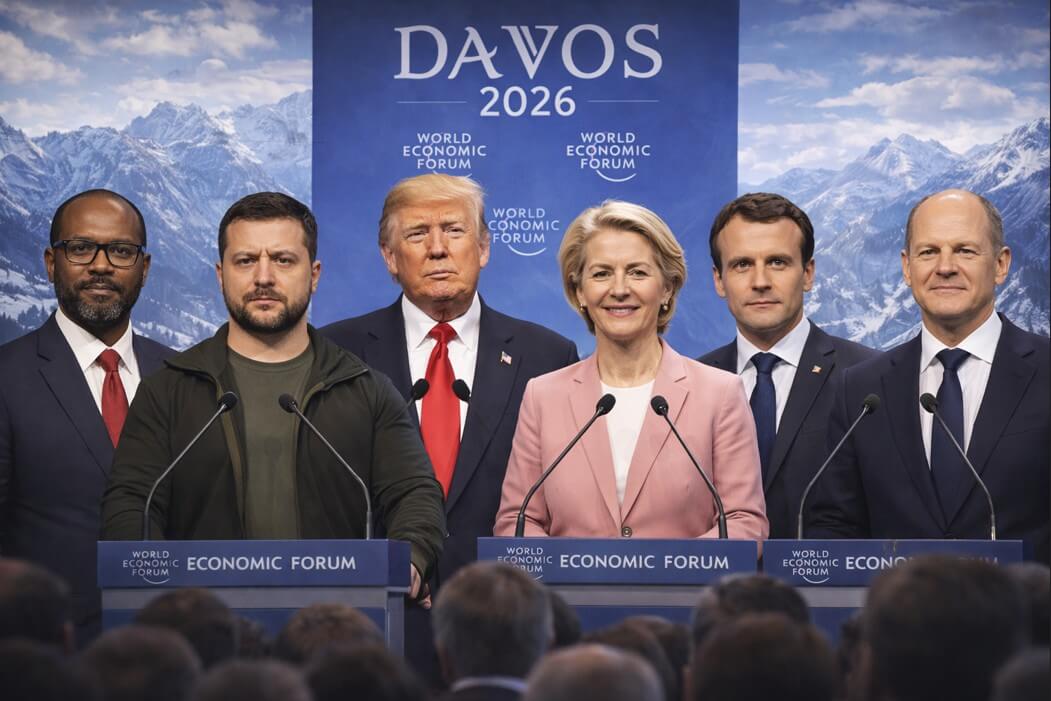
The World Economic Forum in Davos acts as a temperature check for global sentiment. In 2026, the temperature was noticeably colder.
Unfortunately, it is possible to say that there is less optimism about cooperation and more concern about fragmentation.
French President Emmanuel Macron’s speech stood out not because it was aggressive, but because it was blunt. His warning about a world drifting away from rules toward raw power echoed what many policymakers had been thinking but not saying openly.
Ursula von der Leyen’s comments reinforced this tone. Her emphasis on avoiding escalation came with an implicit warning. Europe clearly does not want conflict, but it is preparing for it.
Markets heard that message clearly. When leaders talk about preparation rather than compromise, investors assume longer timelines and higher costs.
Words matter less than tools for investors. The EU Anti-Coercion Instrument has existed for a while, but it was rarely discussed publicly. In Davos, that changed. European leaders referenced it openly as a possible response to economic pressure.
This matters because the instrument allows the EU to act faster and more decisively than previous trade mechanisms. It does not require full consensus, and it covers a wide range of retaliatory options.
Markets understand that once legal mechanisms are named, they are easier to use. This does not mean retaliation is guaranteed, but it means the threshold is lower.
On the US side, the language has been equally revealing. US officials have suggested that decades of open market access may have been a mistake. This challenges a core assumption of globalization. Markets were built on the idea that access, once granted, would remain unless extreme conditions arose.
If access becomes conditional, long-term investment models change. Supply chains are reconsidered. Currency hedging strategies shift. Capital becomes more cautious. This is not a short-term market story. It is a long-term structural one.
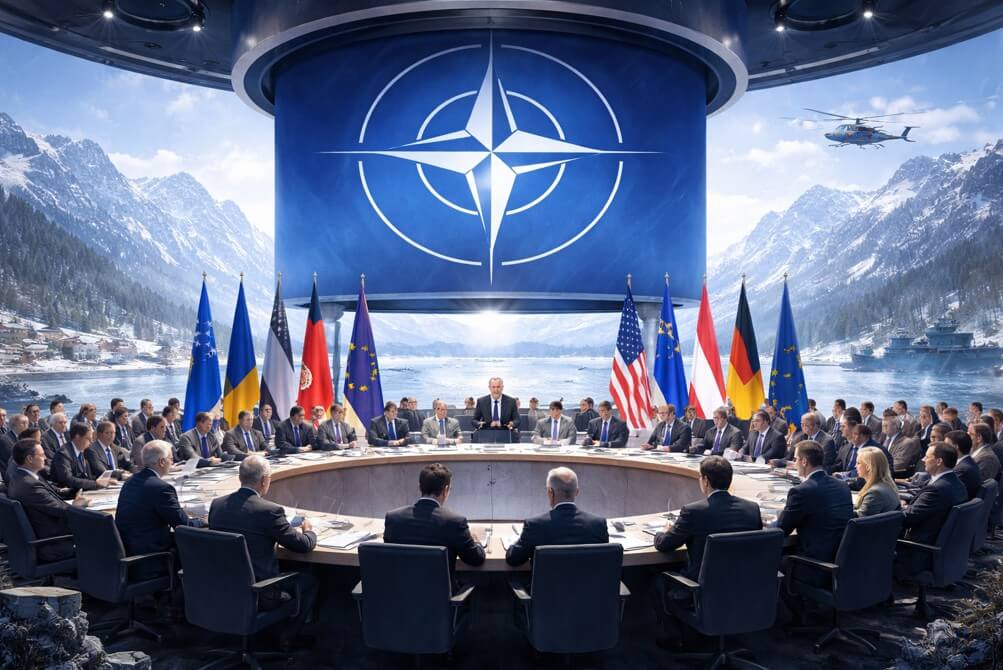
NATO’s involvement adds another layer of complexity because this conflict is not happening at the edge of the alliance. It is happening inside it.
Markets may not trade NATO directly, but they price the stability NATO represents. For decades, alliance cohesion acted as a quiet anchor for European risk assets. That anchor is now being tested.
NATO is not designed to handle disputes that blur the line between trade, territory, and defense. When the Secretary General steps in to mediate, markets read that as a sign that normal political channels are not enough.
NATO Secretary General Mark Rutte’s mediation efforts highlight a subtle but important shift. NATO is no longer just coordinating defense. It is trying to manage internal disputes.
That alone tells markets something. Alliances work best when mediation is unnecessary. When mediation becomes visible, stress is present.
Rutte’s focus on preventing an Article 5 crisis underscores how close rhetoric has come to testing alliance boundaries.
There is also concern about what this conflict is pulling attention away from. Ukraine remains unresolved. Middle Eastern tensions persist, and Asia-Pacific dynamics are shifting.
When alliances become internally focused, external risks can grow unchecked. Markets price this as broader uncertainty, not isolated risk.
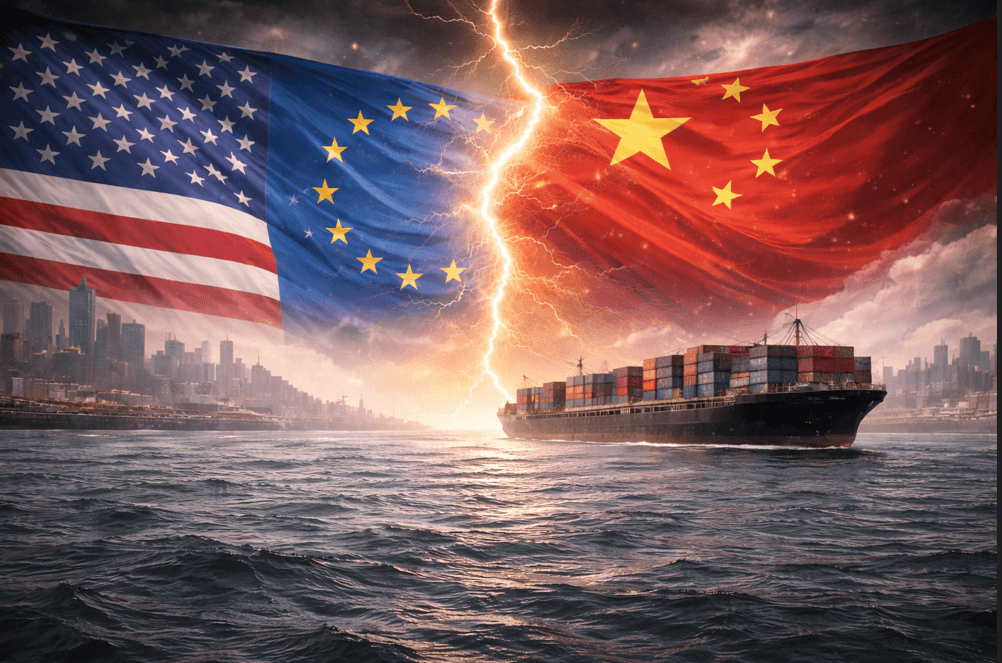
The short answer is yes, but not in a simple way.
The euro and pound have weakened, but not collapsed. That tells us something important. Markets are pricing stress, not panic.
Capital flow is cautious in the forex markets this time. Investors are reducing exposure rather than fleeing entirely. This is consistent with uncertainty about duration rather than expectation of immediate breakdown.
The US dollar’s role has been complicated. While it still attracts safe-haven flows, concerns about long-term fragmentation and retaliation have limited upside. The dollar is strong, but not dominant.
Equity markets reacted sharply to tariff announcements, then partially recovered when rhetoric softened. This pattern suggests markets are trading headlines, but not dismissing the underlying risk.
European equities have underperformed US equities, especially in sectors exposed to exports and global trade. US equities have been more resilient, supported by domestic demand, but valuations are under review.
The key takeaway is that markets are no longer assuming a quick resolution.
With this much political uncertainty, precious metals have become more precious than ever. The market movement in these assets is incredibly different than before.
Gold breaking above $4,800 per ounce is not just a milestone. It is a signal.
This move is not driven by inflation expectations alone. Real rates have not collapsed. Instead, gold is reflecting concern about political stability, alliance cohesion, and long-term trust in systems.
Gold is behaving like insurance, not speculation.
Silver’s rally has been more volatile, but equally telling. Its industrial role ties it to growth, while its monetary role ties it to fear. It has started to push $100 time to time.
Silver’s climb alongside gold suggests markets are hedging against multiple risks at once.
Energy markets usually react earlier during geopolitical crises and uncertainties. It’s mainly because energy sits at the crossroads of politics, inflation, and national security. Right now, all three are colliding.
What stands out in early 2026 is that energy is no longer treated as a background variable. It has moved into the foreground of political strategy. Oil and gas are not just commodities anymore. They are leverage.
Europe is in a better position than it was a few years ago, at least on paper. Supplies are more diversified. Storage levels are healthier. Alternative routes exist. But that does not mean Europe is shielded.
Diversification reduces dependence on one source, not exposure to risk itself. Political risk still matters, and in some cases, it matters more than before. When tensions rise between close allies, markets start asking questions that are difficult to answer with data alone.
None of these questions require immediate disruption to affect markets. Energy prices move on expectations. If traders believe political tension could eventually spill into energy policy, they will price that risk well in advance.
Energy costs feed directly into inflation and growth. Higher prices pressure households, squeeze industry, and create political stress at home. Markets know this chain reaction by heart. That is why energy reacts before other asset classes fully adjust.
Another thing markets are clearly picking up on is the way energy is being discussed by US policymakers. The tone has changed.
Energy is no longer framed simply as an economic issue or a question of market balance. Public criticism of European energy choices, combined with trade pressure, sends a clear signal that energy access and pricing are now part of a broader negotiation toolkit.
From a market perspective, this is uncomfortable. When policy decisions are guided by strategy rather than efficiency, price discovery becomes less reliable. Traders begin to assume that decisions may not follow economic logic, and that uncertainty shows up as a higher risk premium.
This does not mean prices must spike immediately. It means the floor rises. Volatility becomes more persistent, and downside becomes harder to sustain.
What is happening in Europe does not exist in isolation. Several developments elsewhere reinforce the idea that energy is becoming more politicized globally.
Venezuela is a clear example of how energy and politics are now openly intertwined. US involvement, including President Maduro’s capture and statements about overseeing which oil companies operate in the country go beyond traditional sanctions policy.
Venezuela’s production has been weak for years, so this is not about suddenly flooding the market with new supply. Markets are focused on the signal, not the barrels.
If political alignment determines who can access energy assets, investors must rethink how secure supply really is, not only in Venezuela but in other resource-rich countries as well. Precedents matter. Markets tend to assume that what happens once can happen again. That assumption alone is enough to affect pricing.
Syria’s situation adds a different layer. The transfer of oil and gas control from Kurdish forces to the central government led by Ahmed al-Sharaa, with US backing, marks a noticeable shift in approach. It suggests a preference for centralized authority over fragmented arrangements, at least when it comes to energy and security.
On its own, Syrian production is small in global terms. But markets are not pricing volumes here. They are prioritizing regional stability and alignment.
Control over energy assets influences pipeline security, cross-border cooperation, and future infrastructure decisions. When alliances shift, energy corridors are reassessed. That process creates uncertainty even if it eventually leads to greater stability. Markets tend to price that uncertainty first, and clarity later.
Iran remains the classic example of how risk premiums work in energy markets. Even without direct conflict, unrest, military positioning, and opaque export routes keep traders cautious. The U.S. threat to intervene can already have an effect.
Oil markets do not wait for supply to be cut. They price the chance that it might be. As long as Iranian exports rely on unofficial channels and remain vulnerable to enforcement or escalation, a baseline geopolitical premium stays embedded in prices.
That premium may rise or fall with headlines, but it rarely disappears completely.
Key signals include:
The situation unfolding in early 2026 is not just another chapter in global politics. It is a reminder that markets are built on assumptions, and those assumptions can change.
Trade, security, and energy are now tightly linked. Alliances are being tested. Investors are responding by demanding higher compensation for uncertainty.
Whether this leads to adjustment or fragmentation remains to be seen. What is clear is that politics has returned to the center of market pricing, and it is likely to stay there longer than many expect.
Why do markets react so strongly to political language, even before any policy is implemented?
Markets are forward-looking by nature. Investors do not wait for laws or tariffs to be enforced. They react to intent, tone, and probability. When political language becomes more rigid or confrontational, markets begin adjusting for outcomes that may only materialize months later.
Could this situation push Europe toward greater financial independence from the US?
That discussion is already underway. Efforts around strategic autonomy, payment systems, and defense coordination have been debated for years. Rising tensions may accelerate these plans, but doing so comes with costs and long timelines that markets will carefully assess.
Why are precious metals reacting more than equities in some regions?
Gold and silver respond less to earnings expectations and more to trust, stability, and systemic risk. When investors feel uncertain about long-term political or institutional reliability, metals move first, before equity markets fully adjust.
Is this conflict more dangerous for markets than previous trade wars?
Potentially, yes. Earlier trade wars were largely economic disputes with room for compromise. The current tensions are tied to sovereignty, security, and long-term strategic positioning, which are much harder to resolve quickly.
How should long-term investors think about geopolitical risk without overreacting?
The key is balance. Geopolitical risk should inform positioning, not dominate it. Diversification, exposure to real assets, and avoiding crowded trades tend to matter more than making aggressive directional bets based on headlines alone.
Would like to learn how to look financial markets from a different angle? Then keep reading and invest yourself with ZitaPlus.