Start Trading Now
Sign up for ZitaPlus, where knowledge and personalized support come together for your success.
Open Real Account Open Demo Account
Copper has been outlasting most things people build for thousands of years. Now it's being asked to do something harder: carry the electricity for cars, power grids, and AI data centers. Let’s take a look at why it matters so much, where it ends up, what copper has to do with the economy, and why supply keeps falling short.
Silver also conducts electricity, but it costs far more. Copper has quite a few advantages; it bends, stretches, and takes plenty of abuse before it breaks, and it can be melted down and reused over and over without losing quality. Behind a wall, a copper pipe or cable can run for decades with nobody thinking about it, which is exactly what you want from something you'll never see again. Hospitals even fit copper door handles and bed rails, because bacteria tend to die faster on it than on most surfaces.
The usual rival is aluminium. It's lighter and cheaper, and it has taken over on a lot of overhead power lines. But for the same current it has to be noticeably thicker. Fine on a pylon. This is a problem inside a phone or a car, where every millimeter counts. So aluminium nibbles at the edges while the core jobs stay with copper.
Look at almost anything that plugs in, spins, or carries current and there's copper in there somewhere. The table gives the spread, and the sections after it add some detail.
| Where | Shape | Advantage |
| Buildings | Wiring, water pipes, roofing | Lasts for decades behind the walls |
| Power grids | Cables, transformers, substations | Moves electricity with little waste |
| Cars and trains | Motors, batteries, chargers | An electric car uses about three times more than a petrol one |
| Electronics | Phones, chips, circuit boards | Carries current in very small spaces |
| Clean energy | Solar farms, wind turbines, storage | Collects and links the power |
| Data centers | Power gear, cooling, cabling | Huge electrical load |
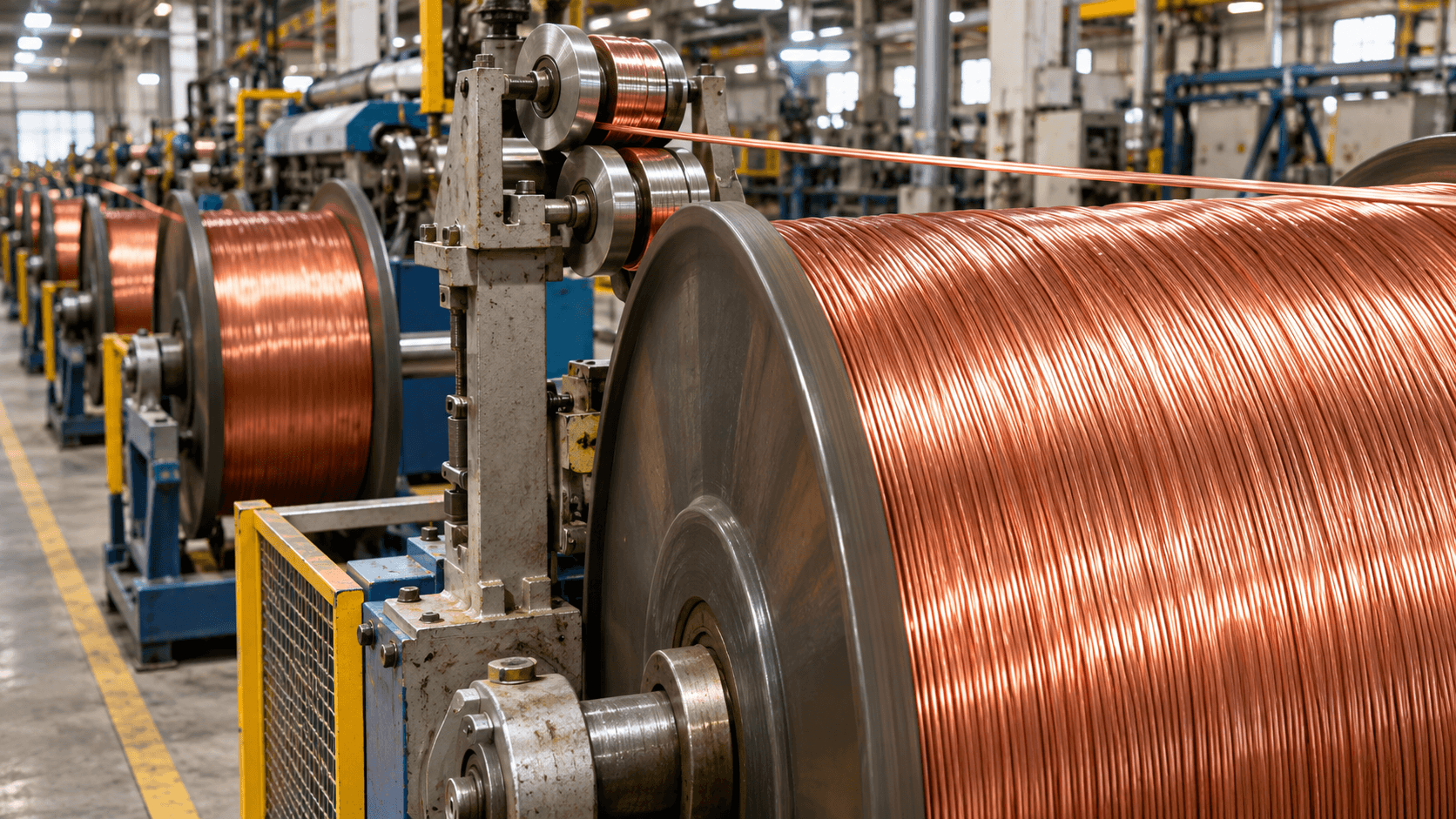
Buildings come first. One single-family home holds roughly 400 pounds, or about 180 kilograms, of copper in its wiring, pipes and fittings. Then come the factories, motors, air conditioners and machinery that fill every city. Put it all together and roughly three-quarters of the world's copper goes into something electrical. It isn't exciting, but it pays the mining industry's bills year in and year out.
Electric cars changed the math. An internal combustion engine car holds a few dozen kilograms of copper. However, an EV holds roughly three times as much, which is mostly in the motor, the battery wiring, and the cables. Public chargers add more. Wind turbines and solar farms need copper to collect and carry what they generate, and the grid has to be rebuilt to take it. Clean energy sounds light and airy. Underneath, it's miles of wire.
Then AI arrived. A data center requires a lot of power for getting electricity to thousands of servers, then carrying away the heat. That takes copper cabling, busbars, transformers and cooling gear. S&P Global estimates 30 to 40 tonnes of copper per megawatt of capacity, so a 100 megawatt campus could hold somewhere between 3,000 and 4,000 tonnes, mostly in the power and cooling systems. Big AI sites can use several times more than older ones. Even so, AI is unlikely to become the largest buyer. It's an extra guest at a dinner table that was already full.
Traders call copper Dr. Copper, as if it had a PhD in economics. The nickname has stuck for decades, and it is far more than a joke now.
The price of the metal has a simple logic. Copper is used in houses, factories, cars, and power lines. So orders rise when the economy is growing and dry up when it isn't. The price can turn before official data does. A sharp, lasting slide has been read as a warning that factories and builders are cutting back. Analysts glance at it the way a nurse glances at a pulse.
He's not always right, though. China uses more than half of the world's copper, so a wobble in its property market can sink the price on its own, whatever is happening elsewhere. And newer demand from grids, clean energy and AI doesn't follow the usual boom and bust rhythm. So when copper rises, it's no longer clear whether the world is booming or just building power lines. Dr. Copper still offers clues. He just has more patients than he used to.
Copper comes from a short list of places, and the list hasn't changed much in years.
| Country | Share in the World | Status |
| Chile | About a quarter | Biggest producer, but the ore is getting poorer |
| Democratic Republic of Congo | Around 13% | Overtook Peru for second place in 2024 |
| Peru | Around 13% | Output has barely moved for years |
| China | Not a big miner | Uses over half the world's copper and leads in smelting and refining |
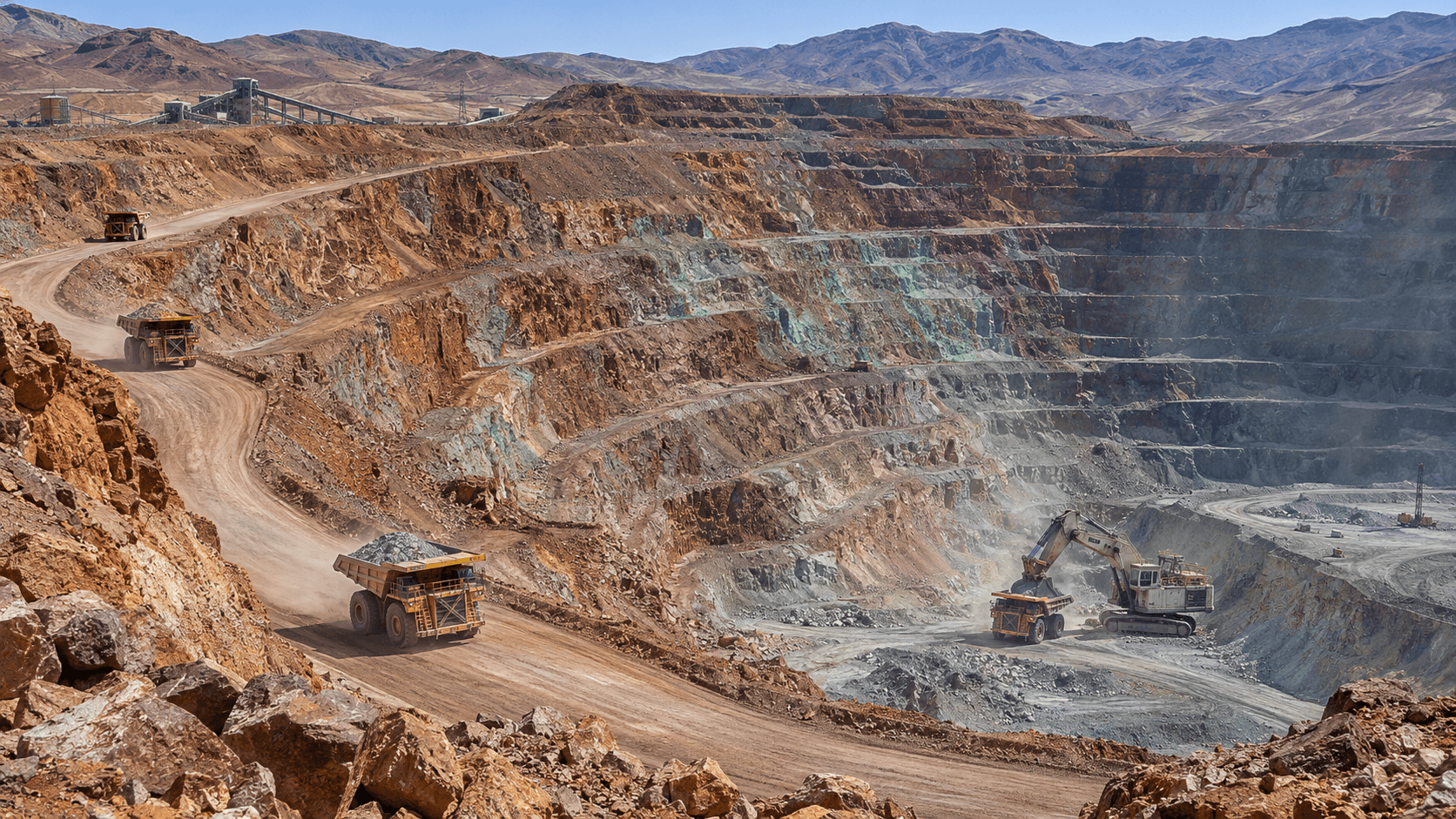
Here's the problem in one number. Ore at big Chilean mines used to hold more than 1% copper. Now it's closer to 0.6%, which means a tonne of rock gives up only around six kilograms of metal. Across the industry, average grades have fallen about 40% since 1991. Miners dig deeper and crush more rock for every tonne of copper, and new finds are rare. A new mine can take 10 to 17 years from discovery to first output. Pay more for copper and mines still don't appear any faster. Geology doesn't care about prices.
2026 has been a good example. Codelco, Chile's state miner, dropped its 2026 production target in August after accidents and setbacks, and BHP expects output at Escondida, the world's largest copper mine, to fall as grades decline. Sprott estimates that disruptions removed about 600,000 tonnes of expected 2026 mine output, close to 2.5% of annual supply. Several banks now expect a refined copper deficit, and the International Copper Study Group flipped its 2026 outlook from a surplus to a deficit in May.
The story doesn't stop at the mine. When copper stays expensive, the cost trickles into building bills, car prices and power projects, which is why plenty of manufacturers lock in prices months ahead. Countries that dig a lot of it, Chile and Peru especially, see their currencies and budgets rise and fall with the copper price, and mining shares and futures on COMEX and the LME follow it too. None of this is financial advice, and commodity prices can swing hard.
The metal matters because the modern economy runs on electricity, and electricity runs through copper. Buildings, cars, grids, clean power, and AI data centers all need more of it, while the supply side is slow, bunched into a few countries, and digging deeper for poorer ore. That gap is why people keep a close eye on it.
Why is copper called Dr. Copper?
Its price tends to rise and fall with economic growth, so traders use it as an early hint of where the economy is heading.
What is copper mostly used for?
Mostly electrical wiring and equipment, plus construction, transport, and electronics. Around three-quarters of use is tied to electrical applications.
How does AI affect copper demand?
AI data centers need heavy power systems and cooling, both full of copper. That demand lands on top of everything else copper already does.
Which countries produce the most copper?
Chile leads with about a quarter of mined supply. The Democratic Republic of Congo and Peru follow with roughly 13% each.
Can anything replace copper?
Sometimes. Aluminium works in some jobs, but it carries less current for its size, so copper is hard to replace in tight spaces.
Would like to learn how to look financial markets from a different angle? Then keep reading and invest yourself with ZitaPlus.