Start Trading Now
Sign up for ZitaPlus, where knowledge and personalized support come together for your success.
Open Real Account Open Demo Account
Central banks rarely dominate the agenda of an average person, yet they are the invisible hand behind almost every major move we see on our screens. When a currency suddenly spikes or bond yields shift without a clear headline, the source is usually not a specific company or even a politician. More often than not, it is a central bank quietly adjusting the levers of the global economy.
By 2026, central banking has moved into a strange and somewhat uncomfortable new chapter. The "emergency mode" that defined the high-inflation years has finally wound down, and the panic over rising prices has largely faded. However, policymakers now face a much more delicate task: they have to step away from extreme support measures without giving investors a reason to panic. Markets have grown quite comfortable with having a safety net, and pulling that net away, even slowly, is a high-stakes game.
Despite how complex the financial world has become, the core mission of a central bank is actually pretty straightforward. While every country has its own specific quirks, most central banks are focused on the same few goals.
Most of them spend their days trying to:
It is worth noting that central banks generally do not try to manage the stock market every day. Many traders assume they do, but in reality, policymakers are usually reacting to broad economic data rather than trying to dictate where a specific index should trade.
Most of us only hear about central banks when they change interest rates. This "policy rate" is their most famous tool because it sets the tone for borrowing costs everywhere. When the bank moves that rate, mortgages, car loans, and business credits all feel the impact eventually.
However, rates are not the only weapon in their arsenal. By 2026, the size of a central bank’s balance sheet remains a massive talking point. Even if they aren't actively buying new assets, the trillions of dollars in bonds they already hold act as a heavy anchor for market liquidity.
Markets have realized that these institutions cannot simply disappear from the financial system overnight. If they sell off their bond holdings too quickly, it could cause a spike in interest rates that kills off economic growth. This process is called "Quantitative Tightening." It is a slow and painful dance that policymakers are still trying to master.
Modern central banking is as much about psychology as it is about economics. We call this "Forward Guidance," but you can think of it as the art of verbal intervention. Markets move long before a single rate is actually changed. They move when people expect a change.
This is why every word in a press conference or a policy statement is analyzed closely. A single offhand remark can calm a nervous market or send it into a tailspin. By 2026, many traders have realized that the actual decision, whether to hike or cut, is less important than the explanation given afterward.
If the bank stays silent, that silence can sometimes feel louder than a shout. This is especially true during times of geopolitical tension when the world is looking for a steady hand to guide the financial ship.
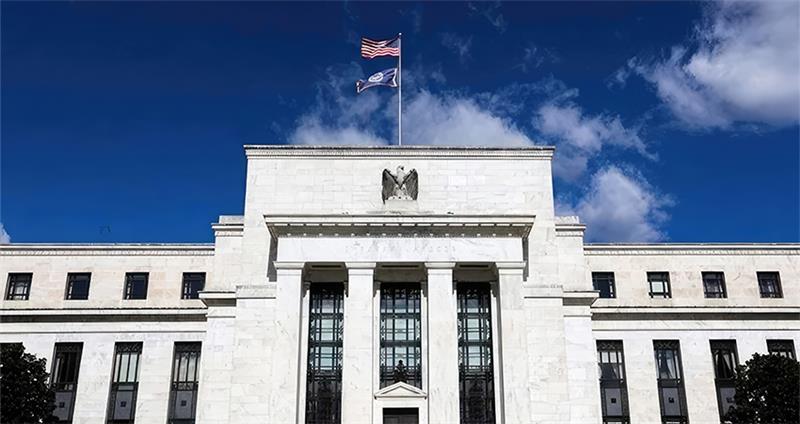
While every country has its own bank, a few carry significantly more weight because they control the world’s reserve currencies. When these giants move, the rest of the world has to react.
The Fed remains the undisputed heavyweight champion. Because the U.S. dollar is the primary currency for global trade, the Fed's decisions effectively set the "price of money" for the entire world. In 2026, the Fed is trying to find a "neutral" stance, a place where policy isn't too hot or too cold. Even when they do nothing, the global markets are constantly trying to guess what they might do six months from now.
The ECB has perhaps the hardest job in finance. They have to set one interest rate for a group of countries that are all in different economic states. What works for Germany might be a disaster for Italy. This forces the ECB to be masters of compromise. In 2026, a huge part of their job is simply managing the "spreads" between the bonds of different member states to make sure the Eurozone stays unified.
For decades, Japan was the global outlier with its "ultra-loose" money policies. That era finally ended in 2025, and 2026 has been defined by the struggle to return to a normal world. This "normalization" sounds peaceful, but in practice, it is incredibly volatile. Global investors who spent years borrowing cheap yen to invest elsewhere are now having to rethink their entire strategy as Japanese yields start to rise.
The BoE operates in a unique environment where policy changes hit households almost instantly. Since many UK mortgages are tied to short-term rates, the BoE has to be incredibly careful not to crash the housing market while trying to control inflation.
The PBoC doesn't always play by the same rules as Western banks. They use more targeted tools and operate with less transparency. However, as the world's second-largest economy, their decisions on credit growth and currency stability ripple through commodity markets and emerging economies every single day.
By 2026, we are seeing a lot of "policy divergence." In the past, central banks tended to move together in a herd. Now, every country is on its own path.
One country might be cutting rates to save a slowing economy, while another is still fighting a lingering inflation spark. For a trader, this divergence is where the real money is made. It creates strong trends in the currency markets and forces capital to flow from low-interest regions to high-interest ones.
Central banks create the "weather" that every trader has to fly through. Currencies are usually the first to react to a policy shift, followed closely by bonds. Equities are a bit more unpredictable; sometimes low rates help stocks by making borrowing cheaper, but if rates are low because the economy is dying, stocks might fall anyway.
Commodities like gold also have a deep relationship with central banks. Gold usually moves based on "real yields". It is just the interest rate minus inflation. If a central bank loses its credibility and inflation gets out of control, gold usually becomes the go-to asset for safety.
At the end of the day, central banks don't have a magic wand that controls the economy. Their influence has limits, and their policies take months or even years to fully work their way through the system.
For anyone looking to understand the markets in 2026, the goal isn't to perfectly predict what a central banker will say. The goal is to be aware of the signals they are sending. Understanding the "why" behind their decisions is the best way to stay calm when the market starts to get noisy.
Can a central bank actually go bankrupt if it loses too much money?
Technically, no. Unlike a private business, a central bank can operate with "negative equity" because it has the unique power to create the very currency it uses to pay its bills. However, if a central bank loses massive amounts of money, it can lose its credibility. If people stop trusting the bank's ability to manage the currency, the result is not a bankruptcy filing but rather a collapse in the currency's value, also known as hyperinflation.
Are central banks now using digital currencies to replace physical cash?
By 2026, many central banks have moved beyond the testing phase of Central Bank Digital Currencies (CBDCs). While physical cash is still being printed, digital versions of the dollar, euro, and yen are being integrated into the financial system to make cross-border payments faster and more secure. The goal is not necessarily to kill off cash, but to provide a government-backed alternative to private stablecoins and cryptocurrencies that are already used by millions.
How much influence do politicians actually have over interest rate decisions?
This is a constant tug of war. Most modern central banks are "independent," meaning they are legally protected from being told what to do by a President or Prime Minister. However, politicians apply public pressure to keep rates low, especially before an election. In 2026, we are seeing a trend where governments use "fiscal policy" (spending and taxes) to influence the economy, which sometimes forces the central bank’s hand regardless of their independence.
Why is a central bank suddenly talking about climate change?
It might seem odd for a bank to care about the environment, but central bankers view climate change as a "systemic risk." If massive floods or fires destroy major industries or housing markets, banks could fail and the entire economy could stall. By 2026, many central banks have started conducting "climate stress tests" to make sure the private banks they supervise are prepared for the financial fallout of extreme weather and the transition to green energy.
What happens when two major central banks move in opposite directions?
This is what we call "policy divergence," and it is a massive driver for currency traders. For example, if the Federal Reserve is raising rates while the Bank of Japan is keeping them low, investors will sell their Yen to buy Dollars so they can earn the higher interest rate. This makes the Dollar stronger and the Yen weaker. Divergence creates trends in the market that can last for months or even years, shaping everything from the price of imported cars to the cost of travel.
Would like to learn how to look financial markets from a different angle? Then keep reading and invest yourself with ZitaPlus.